


Real estate investment remains one of the most discussed paths to building income and capital. Many men consider this field as a way to create stability, diversify earnings, or move beyond salaried work. However, entering real estate without preparation can lead to financial loss.
Modern learning environments are complex. A person may study market data, review listings, and then shift attention to unrelated online activity, such as browsing entertainment or even topics like hot slot casino games, before returning to investment decisions. This pattern highlights the need for structured education.
Courses on real estate investment aim to provide that structure. They focus on analysis, risk assessment, and strategic planning rather than speculation. For beginners and intermediate learners, these courses can define a clear entry path.
Why real estate requires structured learning
Real estate involves multiple variables. Property value depends on location, demand, economic conditions, and financing terms. Without a framework, it is difficult to evaluate opportunities.
Courses help participants:
- understand how markets function
- analyze property value
- assess financial feasibility
- identify risks before committing capital
Unlike simple transactions, real estate decisions often involve long-term consequences. Training reduces uncertainty and supports informed decisions.
Core components of real estate courses
Effective courses follow a structured approach. They divide the learning process into key areas.
Market analysis
The first component focuses on understanding the market.
Participants learn how to analyze:
- supply and demand
- price trends
- rental rates
- economic indicators
Market analysis provides context. It helps determine whether a location is suitable for investment.
Without this step, decisions rely on assumptions rather than data.
Property evaluation
After understanding the market, the next step is evaluating individual properties.
Courses teach how to assess:
- property condition
- location factors
- potential for value growth
- expected rental income
This evaluation helps compare different options.
A property may seem attractive at first glance but fail under detailed analysis.
Financial modeling
Real estate investment requires financial planning.
Participants learn how to calculate:
- acquisition costs
- operating expenses
- expected returns
- financing terms
Financial models help estimate profitability.
They also reveal whether an investment aligns with personal goals.
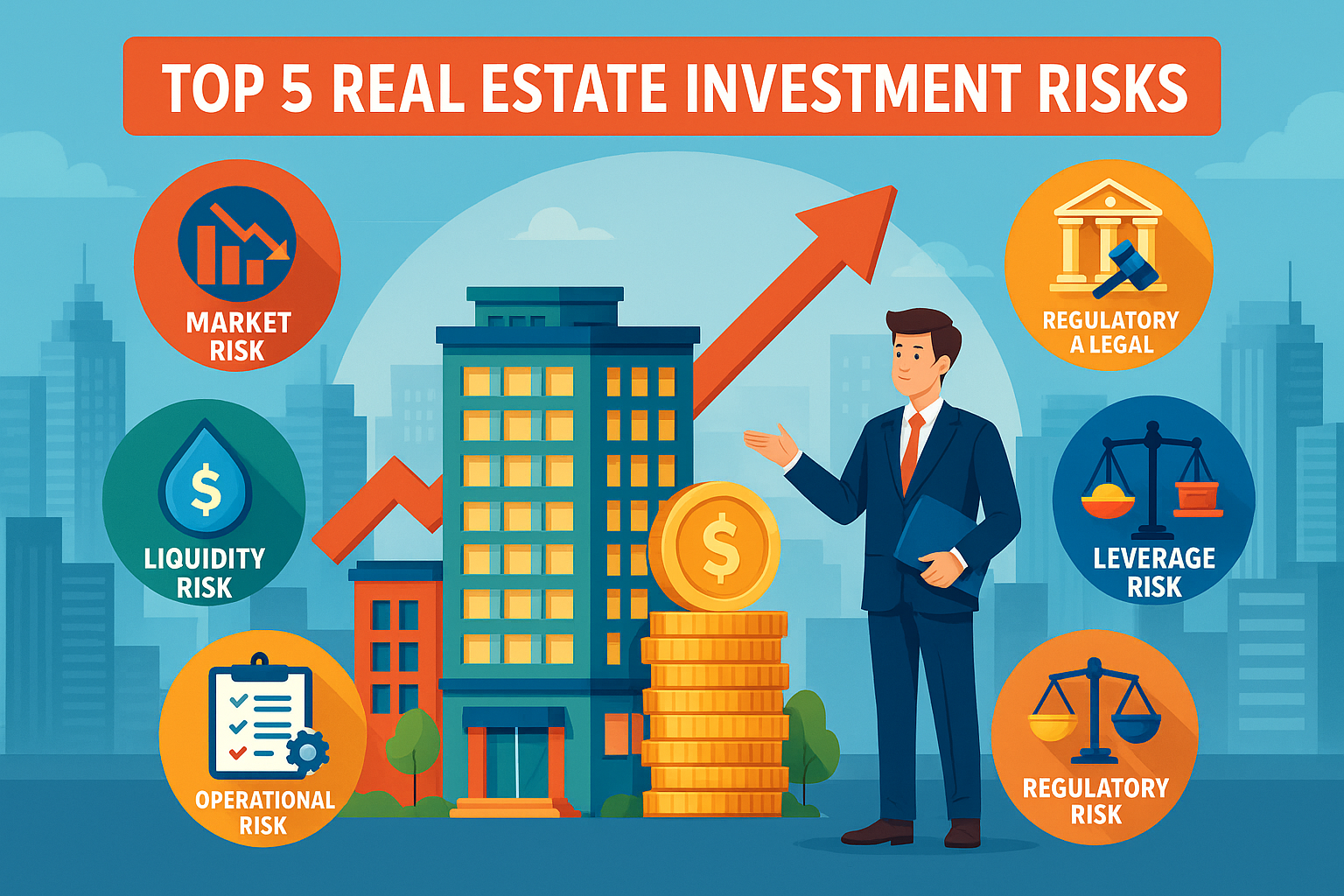
Understanding risks in real estate
Risk is a central part of any investment.
Courses dedicate significant attention to identifying and managing risks.
Market risk
Property values can change due to economic shifts.
Courses explain how to monitor indicators and adjust strategies.
Liquidity risk
Real estate is not easily converted into cash.
Participants learn how to plan for long holding periods.
Operational risk
Managing property involves ongoing tasks.
These include maintenance, tenant relations, and legal compliance.
Courses provide frameworks for handling these responsibilities.
Financial risk
Leverage can increase returns but also increases exposure.
Participants learn how to balance debt and equity.
Developing a strategy
A key outcome of real estate courses is the ability to create a strategy.
A strategy defines how an investor approaches the market.
Long-term rental strategy
This approach focuses on generating steady income.
Participants learn how to:
- select properties for rental demand
- manage tenants
- maintain occupancy
This strategy emphasizes stability.
Value-add strategy
Some investors focus on improving properties.
This may involve renovation or repositioning.
Courses teach how to identify opportunities for value creation.
Short-term investment approach
This includes buying and selling properties within a shorter timeframe.
Participants learn how to evaluate timing and pricing.
Each strategy has different requirements and risks.
Skills developed through these courses
Real estate education is not only about knowledge. It also develops practical skills.
Analytical thinking
Participants learn to evaluate data and make decisions based on evidence.
Financial planning
Understanding numbers is essential in real estate.
Courses improve the ability to manage budgets and projections.
Risk assessment
Participants learn to identify potential issues before investing.
Decision-making
Real estate involves complex choices.
Courses help structure these decisions.
Common mistakes addressed in training
Courses often highlight frequent errors.
Overestimating returns
Beginners may expect higher profits than realistic.
Training emphasizes accurate calculations.
Ignoring hidden costs
Expenses such as maintenance and taxes are sometimes overlooked.
Courses teach how to include all costs.
Lack of research
Investing without market analysis increases risk.
Courses reinforce the importance of data.
Emotional decisions
Some investors rely on intuition rather than analysis.
Training encourages a structured approach.
Practical elements of effective courses
To be useful, courses must include practical components.
Case studies
Participants analyze real scenarios.
This helps understand how decisions are made.
Simulations
Simulated investments allow participants to test strategies without financial risk.
Exercises
Tasks include evaluating properties and building financial models.
These activities reinforce learning.
Choosing the right course
Selecting a course requires careful consideration.
Important factors include:
- focus on practical application
- clear structure
- inclusion of real examples
- opportunities for feedback
A course should provide tools, not just theory.
From learning to investment
Education is only the first step.
Participants must apply what they learn.
This includes:
- analyzing real opportunities
- making initial investments
- adjusting strategies based on results
Without action, knowledge remains unused.
Conclusion
Courses on real estate investment for men provide a structured approach to entering a complex field. By focusing on analysis, risk management, and strategy, they help participants move from uncertainty to informed decision-making.
Real estate is not a simple path to profit. It requires careful planning, data analysis, and consistent evaluation. Courses that emphasize these elements prepare participants for long-term involvement in the market.
With the right approach, real estate can become a stable component of a broader financial strategy. The key lies in understanding the process and applying knowledge in a disciplined way.